Friday, May 9, 2014

MEDICAL DOCTORS WILL NOT BE APPOINTED IMMEDIATELY


By: Kwamina Bamfo-Agyei
Hon. Addo in White and Dr. Asare in Black suite
From Next year Medical Doctors who complete their Housmanship will not be appointed immediately in the government hospitals until they are given a financial clearance from the ministry of finance.

This is as a result of Government spending over 90% on wage bill; hence the directive from the Ministries of Health and Finance not to appoint any medical doctor until the clearance is given.

This was made known by the Chief Executive Officer of the Cape Coast Teaching Hospital Dr. Daniel Asare in answer to question from CITI FM Correspondent Kwamina Bamfo-Agyei regarding the new directive from the ministry of finance that only 3 months back pay can be paid to any public worker even if the worker had not been paid for more than one year. He said that health workers are not affected by the 3month back pay directive.

In a related development the Central Regional Minister Ebenezer Tey Addo has directed that the Teaching Hospital create a Kidney Fund that can assist patients who suffering from kidney problems to assist them to be treated since it is a lifelong disease.

Hon. Addo said this when he toured the Teaching Hospital to familiarize himself with the operations of the hospital.
Some of the workers indicated that they are facing acute water shortage in the hospital including inadequate accommodation challenges. They appealed to the minister to assist in solving the challenges affecting them. 

RISING DEATHS AMONG PASSENGERS OF BUSES A BIG CHALLENGE


PRESS RELEASE

One of the major road safety challenges in the West African sub-region is the rising deaths among passengers of buses. 

Today Thursday May 8, 2014 is the West African Road Safety Organisation (WARSO) day. May 8, every year has been set aside by WARSO and observed by all West African Countries to celebrate the anniversary of the inauguration of WARSO.
All member countries are expected to mark the WARSO day with activities aimed at improving the knowledge and confidence of bus passengers to demand safety from bus operators and drivers.
WARSO was established 6 years ago today under the auspices of the Economic Community of West African States (ECOWAS) by His Excellency Dr. Mohammed Ibn Chambas, then President of ECOWAS to among others; promote road safety in west African; Foster partnership and collaboration at the sub-regional level to advance the road safety agenda and to enhance knowledge sharing and harmonization of some national plans of actions within the sub-region;

Over the last six years of existence, WARSO has  harmonized the Use of standard retro-reflective tape by vehicles in West Africa to aid vehicle conspicuity; developed a standard format for road traffic crash data collection; initiated a Regional Vehicle Administration and Information System (RVAIS) project in order to have a uniform vehicle registration system in the Sub-Region and has also introduced the Passenger Manifest to collect information on both drivers and passengers at bus terminals before the start of a journey among others.

The theme for this year’s WARSO day is “Empowering Passengers of buses to improve road safety in West Africa”.

One of the major road safety challenges in the West African sub-region is the rising deaths among passengers of buses. All member countries are expected to mark the WARSO day with activities aimed at improving the knowledge and confidence of bus passengers to demand safety from bus operators and drivers.

The Executive Director of the National Road Safety Commission, Ing.(Mrs.) May Obiri-Yeboah says that, “On the occasion of WARSO day, we in Ghana make a respectful appeal to H.E.  John Mahama, the President of Ghana through the Hon Minister of Transport to advocate for best road safety practices in the west African region as Chairman of Ecowas and to encourage his colleague Heads of States to raise the road safety profile in their countries and also grant WARSO an observer status in Ecowas to help facilitate the development and integration of road safety agenda”

Other activities planned to mark the day in Ghana include the raising of WARSO flags, photo exhibition of passenger related crashes and casualties at some major terminals and passenger empowerment education and promotion of the need for the Passenger manifest.

We wish to appeal and invite the diplomatic community to join in the observation of the WARSO day by reflection on ways to help improve upon the road safety situation in their respective countries so that together we can make road safety better in the West African sub-region.

Thank you.


ISSUED BY THE NATIONAL ROAD SAFETY COMMISSION

Tuesday, May 6, 2014

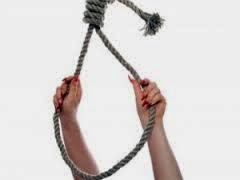
NATIONAL SERVICE PERSONNEL COMMITS SUICIDE

Kwamina Bamfo-Agyei
The body of the deceased of the suicide case in Jukwa has been taken to the mortuary by the Ghana Police Service.
A young man believed to be 29 years, a National Service Personnel in Accra had committed suicide around Jukwa clinic.
According to an eye witness from the area Kate Okyere of Central Press College noted that the young man visited her girl friend and told her to go to the market to buy food stuff to prepare food for him, on her arrival from the market she saw him hanging in the room. That was around 2:30pm on Tuesday May 6, 2014.
Currently the girlfriend and other neighbours have reported to the Jukwa police station. Detail soon.


Suicide facts
  • Suicide is the act of purposely ending one's own life. How societies view suicide varies by culture, religion, ethnic norms, and the circumstances under which it occurs.
  • Nearly 1 million people worldwide commit suicide each year -- about 30,000 each year in the United States.
  • Self-mutilation is the act of deliberately hurting oneself without meaning to cause one's own death.
  • Physician-assisted suicide is defined as a doctor ending the life of a person who is incurably ill in a way that is either painless or minimally painful for the purpose of ending the suffering of the individual.
  • The effects of suicide on the loved ones of the deceased can be devastating, resulting in suicide survivors enduring a variety of conflicting, painful emotions.
  • Life circumstances that may immediately precede a suicide include the time period of at least a week after discharge from a psychiatric hospital, a sudden change in how the person appears to feel, or a real or imagined loss.
  • Firearms are the most common means by which people take their lives. Other common methods include overdose of medication, asphyxiation, and hanging.
  • There are gender, age, ethnic, and geographical risk factors for suicide, as well as those based on family history, life stresses, and medical and mental-health status.
  • In children and teens, bullying and being bullied seem to be associated with committing suicide, and being bullied may put them at risk for committing murder-suicide.
  • Warning signs that an individual is imminently planning to kill him- or herself may include the making of a will, getting his/her affairs in order, suddenly visiting or writing letters to loved ones, buying instruments of suicide, experiencing a sudden change in mood, or writing a suicide note.
  • Many people who complete suicide do not tell any health professional of their intent in the months before they do so. If they communicate a plan to anyone, it is more likely to be a friend or family member.
  • The assessment of suicide risk often involves an evaluation of the presence, severity, and duration of suicidal thoughts as part of a mental-health evaluation.
  • Treatment of suicidal thinking or a suicide attempt involves adapting immediate treatment to the sufferer's individual needs. Those with a strong social support system, who have a history of being hopeful, and have a desire to resolve conflicts may need only a brief crisis-oriented intervention. Those with more severe symptoms or less social support may need hospitalization and long-term outpatient mental-health services.
  • Treatment of any underlying emotional problem using a combination of psychotherapy, safety planning, and medication remains the mainstay of suicide prevention.
  • People who are contemplating suicide are encouraged to talk to a doctor or other health professional, spiritual advisor, or immediately go to the closest emergency room or mental-health crisis center for help. Those who have experienced suicidal thinking are commonly directed to keep a list of people to call in the event that those thoughts return. Other strategies include having someone hold all medications to prevent overdose, removing any weapons from the home, scheduling frequent stress-relieving activities, getting together with others, writing down feelings, and avoiding the use of alcohol or other drugs.
  • Techniques for coping with the suicide of a loved one include nutritious eating, getting extra rest, writing about their emotions, talking to others about the experience, thinking of ways to handle painful memories, understanding their state of mind will vary, resisting pressure to grieve by any one else's time table, and survivors doing what is right for them.
  • To help children and adolescents cope with the suicide of a loved one, it is important to ensure they receive consistent caretaking, frequent interaction with supportive peers and adults, and understanding of their feelings as they relate to their age. 
  • Source: Medical Author:

Thursday, May 1, 2014

OVER 4000 GOLD MINERS LAID OFF IN GHANA


By: Kwamina Bamfo-Agyei
Over 4000 miners in Ghana have been laid off from their work due to low international price for gold and high production cost.
The Secretary of Professional and Managerial Staff Union of Ghana Mine Worker Union, Mathani  Awuah disclosed this to Central Press during the May Day celebration in Cape Coast.
It was on the theme Ghana’s Economy: A concern for all. The President John Dramani Mahama assured workers that very soon the country’s economy will turn for the better. The Central Regional Minister E.K.T Addo read the speech for the President.
The President mentioned that Ghanaians and government “will remain allies working together for a common cause” and promised to improve the channels of communications “so that we may strengthen our collaboration.”
He however denied the assertion by the TUC that views expressed by organizations and individuals on the economy are treated with contempt stating that “they are treated with careful consideration.”

Tuesday, April 29, 2014

POTAG SUSPENDS STRIKE ACTION


By: Kwamina Bamfo-Agyei
The Polytechnic Teachers Association of Ghana has suspended its nationwide strike due to the directive given by Labour Commission to the Ministry of Education to resolve the issue within a month.
According to the Chairman of POTAG at Cape Coast Polytechnic branch Isaac Aggrey- Fynn revealed that both POTAG and UTAG met with the Minister of Education Prof. Jane Nana Opoku Agyemang last week to discuss the issue and it was made clear that the Book and Research Allowance is part of the condition of service.
 Two weeks ago the Polytechnic Teachers' Association of Ghana (POTAG) threatened to embark on strike if the government refuses to pay the book and research allowance (BRA) by April 22, 2014.
 He said although POTAG was not against the introduction of the National Research and Innovation Fund, that fund could not replace the BRA, which was part of POTAG's collective bargaining agreement.

Thursday, April 17, 2014

POTAG TO EMBARK ON STRIKE

By: Kwamina Bamfo-Agyei
Isaac Aggrey – Fynn (Chairman POTAG)
The Cape Coast Polytechnic chapter of the Polytechnic Teachers' Association of Ghana (POTAG) has agreed with the ultimatum issued to government to initiate the process to pay the book and research allowance (BRA) by April 22, 2014.
According to the association, it was ready to embark on strike to  fight and defend this legitimate allowance.
The Chairman of the POTAG Chapter Isaac Aggrey – Fynn said the ultimatum followed the government's refusal to respond to the various correspondence forwarded to it for the issues to be resolved.
He said although POTAG was not against the introduction of the National Research and Innovation Fund, that fund could not replace the BRA, which was part of POTAG's collective bargaining agreement.

 He noted that the book and research allowance is part of the basic working tools for the polytechnic teacher which is not just given to POTAG members out of generosity or because the government has so much money to spare but is born out of necessity and countless negotiations between POTAG and the government.